Christmas Mittens Watercolor Clipart Review
When I first opened the Christmas Mittens Watercolor Clipart, my initial reaction wasn't about stitch counts or file formats. It was about the mood. There is a specific kind of magic in watercolor textures that translates surprisingly well to thread, provided you understand how light and shadow behave under a needle. As someone who has spent years turning digital assets into tangible, stitched goods for clients, I look for designs that feel organic rather than stiff. This piece immediately struck me as a perfect candidate for holiday collections, offering a soft, hand-painted aesthetic that can elevate a standard embroidered project into something that feels bespoke and thoughtful.
The Visual Personality of Christmas Mittens Watercolor Clipart
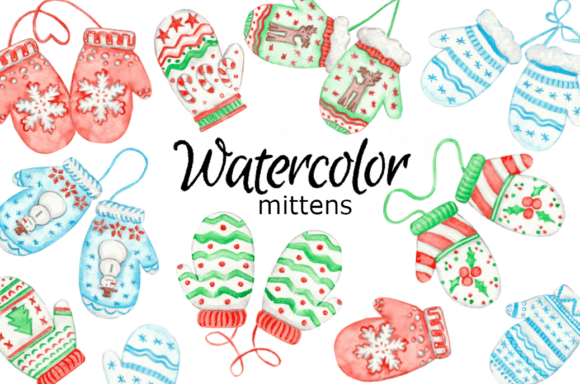
The strength of this design lies in its lack of rigid lines. Traditional vector clipart often relies on sharp outlines that can look harsh when converted to satin stitches. In contrast, Christmas Mittens Watercolor Clipart embraces the bleeding edges and subtle gradients typical of watercolor illustrations. This gives it a whimsical, storybook quality that resonates deeply with buyers looking for cozy, festive vibes. The shape itself is classic—a pair of mittens, likely adorned with traditional winter motifs—but the rendering makes it feel fresh.
For an embroidery designer, this visual personality suggests versatility. It isn't just a graphic; it is a feeling. When placed on a canvas tote bag or a baby onesie, the design doesn't scream "commercial product." Instead, it whispers "handmade with love." This distinction is crucial for small business owners and Etsy sellers trying to build a brand identity that stands out in a crowded marketplace. The illustration category here serves as a bridge between digital art and textile art, allowing the final product to retain the charm of a painting while gaining the durability of machine embroidery.
Real-World Application: From Screen to Stitch
To truly evaluate the potential of Christmas Mittens Watercolor Clipart, we need to move past the screen and imagine it in a real production scenario. Let's say I am preparing a custom order for a local boutique owner who wants a limited run of holiday aprons for their staff. The goal is to create something that looks professional but retains a touch of artisanal warmth. If I were to use this design, I would place it on the chest area of a heavy-duty cotton twill apron.
The watercolor style allows for a creative approach to thread selection. Rather than trying to perfectly replicate every pixel of color, I could use variegated threads to mimic the watercolor washes. A mix of deep reds, icy blues, and snowy whites in the fill stitches could recreate the gradient effect without needing excessive complexity. This approach works exceptionally well for sweatshirt embroidery as well. On a thick fleece, the texture of the fabric complements the soft edges of the watercolor style, making the mittens appear almost three-dimensional.
I also see this design thriving on personalized gifts. Imagine a set of matching pillow covers where each one features a variation of the mittens, perhaps with different background colors. Or consider using it on a kitchen towel for a hostess gift. The design's simplicity ensures it remains legible even at smaller sizes, which is vital for items like caps or patches where space is limited. However, the success of these projects depends heavily on how the design handles the transition from digital pixels to physical thread.
Navigating Technical Challenges and Fabric Choices
While the artistic merit is high, practical application requires careful consideration of technical constraints. One of the primary challenges with watercolor-style designs is density. Because the original image relies on soft transitions, converting it directly to dense satin stitches can result in a muddy, blob-like appearance that loses all definition. To avoid this, I would advise reducing the stitch density in areas meant to represent the lighter washes of the watercolor.
Fabric choice plays an equally critical role. This design demands a stable base. Trying to embroider Christmas Mittens Watercolor Clipart on thin, stretchy jersey fabric without proper stabilizer is a recipe for puckering and distortion. The curves of the mittens require a fabric that holds its shape during the stitching process. For best results, woven fabrics like denim, canvas, or heavy cotton are ideal. These materials provide the necessary tension to keep the design crisp.
There are also specific scenarios where caution is required. Small hoop sizes present a significant risk. If the design contains intricate details in the corners or tiny decorative accents, shrinking the hoop size might force the machine to skip stitches or crowd the thread, ruining the delicate watercolor effect. Similarly, dark fabrics can be tricky. While white thread on a dark background creates a striking contrast, the softness of the watercolor style might get lost against a black or navy backdrop unless you use a high-quality underlay or a light-colored backing to prevent show-through.
Strategic Placement for Maximum Impact
Where you place the design determines its value. On a tote bag, a centered placement works well, but on a curved surface like a baseball cap, the design needs to be simplified. The curvature of the cap can distort the organic shapes of the watercolor style if not adjusted. In these cases, focusing on the core elements of the mittens and removing any peripheral details ensures the design remains recognizable after stitching.
For commercial embroidery projects, such as creating merchandise for a craft fair, consistency is key. Using this design across a range of products—t-shirts, mugs (via transfer), and bags—helps establish a cohesive brand look. Customers appreciate seeing a unified theme, and the friendly nature of the mittens appeals to a wide demographic, from children to adults. This broad appeal makes it a safe bet for small shop products where inventory turnover is important.
Designer Notes for Professional Results
Before committing to a full production run, there are several steps every experienced designer takes. First and foremost, always test the design on scrap fabric. This simple step reveals issues with thread tension, color blending, and fabric stability that cannot be predicted by looking at a digital mockup. Check the thread color contrast carefully; ensure that the chosen threads have enough depth to stand out against the background fabric.
Reviewing the stitch density is another non-negotiable step. Look at the design in black and white mockups to see how the values translate. If the design relies too heavily on light values, it may disappear on certain fabrics. Confirm the hoop size requirements before starting the machine to avoid mid-project errors. Also, inspect small details closely. If the design includes tiny lettering or fine lines, verify that they will hold up after multiple washes, especially for items like baby clothes or kitchen towels that undergo frequent laundering.
Finally, confirm licensing terms. Whether you are selling finished items or digital embroidery files, understanding the rights associated with Christmas Mittens Watercolor Clipart is essential for legal compliance. Ensure you have the permission to use the design for commercial purposes. This protects your business and builds trust with your customers, showing that you operate with integrity and professionalism.
In conclusion, Christmas Mittens Watercolor Clipart offers a unique opportunity to blend the softness of watercolor art with the durability of machine embroidery. By paying attention to fabric choices, stitch density, and placement, designers can create finished products that are not only visually stunning but also commercially viable. For those looking to add a touch of holiday cheer to their portfolio, this design asset is a strong contender that balances creativity with practicality.